Why Meta Ads Are a Powerful Tool for Music Promotion
A great song can still disappear without the right push. Streaming platforms are crowded, social feeds move fast, and even loyal fans can miss a new release if they do not see it at the right time.
That is where Meta ads can make a real difference.
For musicians, producers, labels, and artist teams, Meta ads offer a practical way to get music in front of people who are likely to care. They can support a single release, grow an audience before a tour, bring attention to a music video, or reconnect with fans who already showed interest.
The biggest strength is control. Instead of posting and hoping the algorithm finds the right listeners, Meta ads let artists shape who sees the campaign, how much gets spent, and what success looks like.
Meta ads help musicians reach people beyond their existing audience
Organic reach still matters. A strong post, a short performance clip, or a behind-the-scenes reel can help an artist connect with fans. The problem is that organic reach often stops with people who already follow the artist, plus a limited number of new viewers chosen by the platform.
Meta ads widen that circle.
An artist can use ads to introduce a song to listeners based on interests, behavior, location, age range, and other signals available inside Meta’s ad tools. That matters because music taste tends to gather around scenes, genres, moods, venues, festivals, and related artists.
For example, a folk artist releasing an acoustic single might build an audience around:
- Fans of singer-songwriters and acoustic music
- People interested in local live music
- Users who follow similar artists or genre pages
- Listeners in cities where the artist plans to perform
- People who have interacted with the artist’s videos or profile
A hip-hop artist might take a different path, focusing on fans of related subgenres, beat culture, streetwear, playlists, or local scenes.
The point is not to reach everyone. That usually wastes money. The goal is to reach the people most likely to stop scrolling, listen, save, share, or follow.
This makes Meta ads especially useful for independent musicians. A major label may have radio contacts, playlist relationships, press access, and large release budgets. Independent artists often need a more direct route. Meta ads can help build that route one campaign at a time.
Targeting makes promotion more precise
One of the strongest reasons to use Meta ads for music is the ability to shape audiences with more care than most traditional promotion allows.
A flyer, a general post, or a broad announcement can work, but each one reaches a mixed crowd. Some people may care deeply. Others may have no interest at all. Ads let artists narrow the focus.
Meta offers several audience types that can support music campaigns.
Interest audiences can introduce new listeners
Interest-based targeting helps an artist reach people whose activity suggests they may like a certain genre, artist type, music culture, or event. This works well when promoting a new release to cold audiences.
The best results often come from testing a few audience groups rather than betting everything on one. A band could test fans of related artists against fans of a specific genre, then compare which group watches longer, clicks more, or follows at a better rate.
Custom audiences can reconnect with warm listeners
Custom audiences are built from people who have already interacted with the artist in some way. That might include video viewers, Instagram engagers, Facebook page visitors, or people who visited a website.
This is valuable because warm audiences already know something about the artist. They may only need a reminder.
A simple campaign might show:
- A new single announcement to people who watched past videos
- Tour dates to people who engaged with recent posts
- Merch to fans who visited the store but did not buy
- A full music video to people who watched a short teaser
These campaigns often feel more natural because the audience has already shown interest.
Lookalike audiences can find similar fans
Lookalike audiences help artists reach new people who share traits with an existing group. If an artist has a list of engaged fans, site visitors, or people who watched a video, Meta can use that source to find a larger audience with similar patterns.
This can be useful once an artist has enough engagement data. For newer acts, it may take time to build a strong source audience. Still, it gives growing artists a way to move from a small fan base to a wider pool of likely listeners.
Meta ads are cost-effective when campaigns have a clear goal
Music promotion can get expensive quickly. Studio costs, mixing, mastering, artwork, video production, playlist pitching, live shows, merch, and travel all compete for the same budget. Ads need to earn their place.
Meta ads are useful because they can start small. An artist does not need a huge spend to test which song clip, audience, or message performs best. A modest daily budget can reveal useful patterns before more money goes into a bigger campaign.
The key is to set a clear goal before spending.
A campaign for a new single might aim for:
- More views on a short performance clip
- More clicks to a streaming landing page
- More profile visits
- More email or SMS signups
- More ticket sales in a specific city
- More engagement from fans who already follow the artist
Each goal needs a different setup. A campaign built for video views may not drive many streams. A campaign built for conversions may cost more per result but attract people closer to taking action.
That is why artists should avoid judging every ad by the same standard. A video campaign can be a great success if it introduces the song to thousands of relevant viewers and builds a retargeting audience. A ticket campaign has to be judged more directly against ticket sales.
A simple way to think about spend is to match the budget to the stage of the fan journey.
Campaign stage | Main purpose | Useful ad goal |
Discovery | Introduce the artist or song | Video views, engagement, profile visits |
Interest | Encourage deeper listening | Link clicks, landing page views, follows |
Action | Drive a clear next step | Ticket sales, merch sales, signups |
Retention | Keep fans connected | Repeat engagement, new release reminders |
This keeps the campaign from doing too many things at once.

Engagement metrics show what listeners respond to
One major benefit of Meta ads is feedback. Music can feel hard to measure, especially during early promotion. People may listen quietly, skip quickly, watch twice, or save a post without leaving a comment. Ads help turn some of that behavior into readable signals.
Artists can track metrics such as:
- Video watch time
- ThruPlays or longer video views
- Click-through rate
- Cost per result
- Post saves and shares
- Comments and reactions
- Landing page views
- Purchases or signups, when tracking is set up
These numbers do not replace taste, instinct, or creative direction. They support better decisions.
For example, if one 15-second clip gets stronger watch time than another, that may show which part of the song grabs attention fastest. If one audience shares the ad more often, that group may be a better fit for future releases. If people click a streaming link but leave before completing an action, the landing page or offer may need work.
The data also helps artists compare creative choices.
A musician could test:
- A lyric video against a live performance clip
- A chorus hook against an opening verse
- A direct “listen now” message against a story-driven caption
- A vertical video against cover art with motion
- A local tour date ad against a full tour announcement
Small tests reduce guesswork. Over time, the artist learns what listeners respond to, which audiences matter most, and which creative formats deserve more budget.
That learning can improve more than ads. It can shape future release rollouts, content plans, live show promotion, and fan communication.
Meta ads support every stage of a release plan
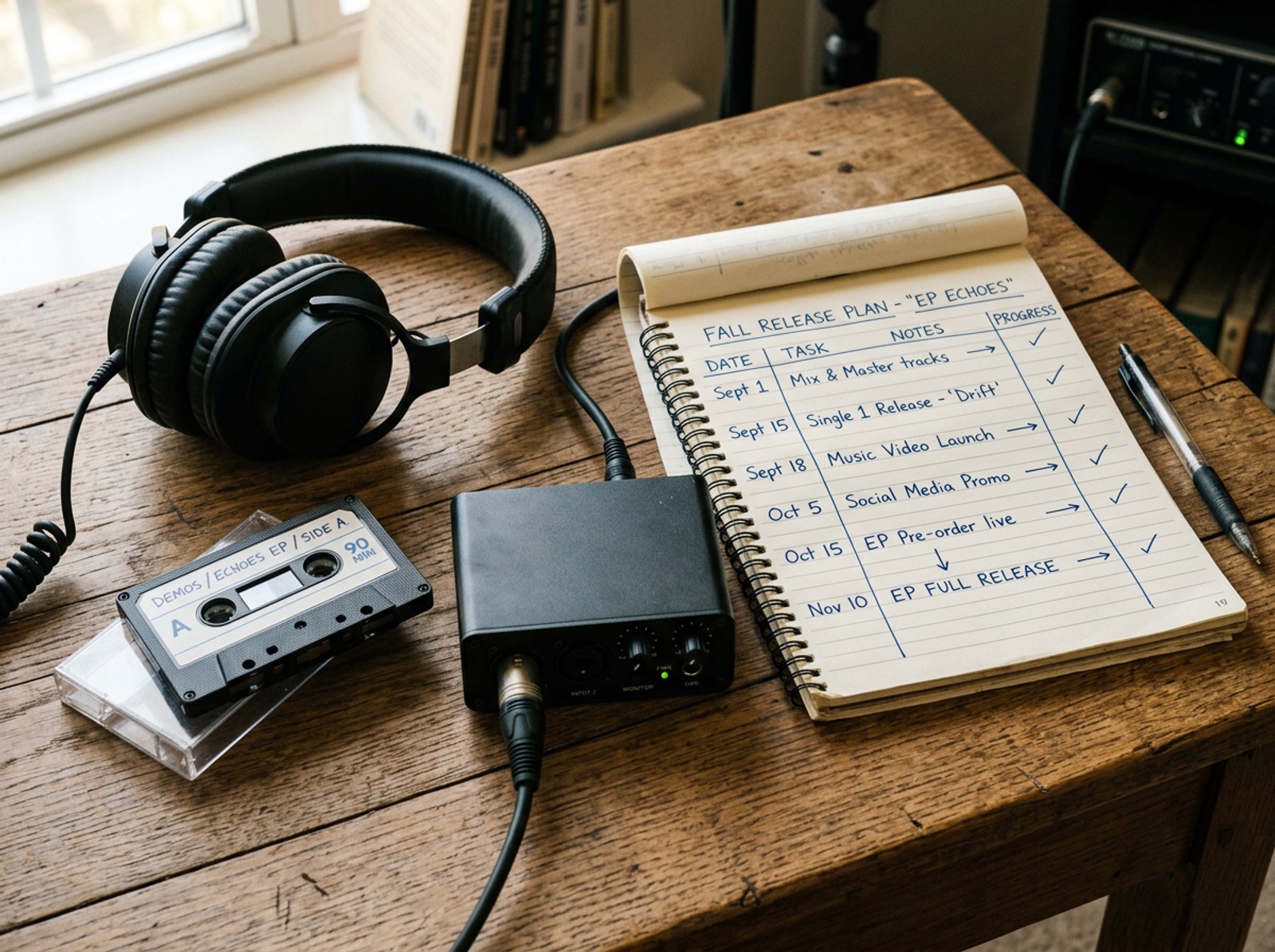
A strong music release rarely depends on one post. It usually works better as a sequence. Meta ads can support each phase, from early awareness to post-release momentum.
Before release, ads can build interest
Pre-release campaigns can warm up listeners before the song drops. An artist might share a studio clip, a short performance, a lyric teaser, or a personal story behind the track.
This stage works best when the ask is light. Instead of pushing for a stream before the song exists, the campaign can focus on attention and connection.
Good pre-release goals include:
- Growing a retargeting audience
- Getting fans to pre-save when appropriate
- Increasing profile visits
- Testing which song clip gets the best response
- Building anticipation for a video or live announcement
By release day, the artist has more than hope. They have a group of people who already saw the song and showed interest.
During release week, ads can focus attention
Release week moves quickly. Posts can get buried. Fans can miss announcements. Ads help keep the release visible during the window when attention matters most.
A release-week campaign might use several pieces of creative, such as a performance clip, a short message from the artist, cover art animation, or a fan-focused teaser.
The call to action should be simple. Listen to the song. Watch the video. Follow for more. Get tickets. Save the track.
Trying to push too many actions at once can dilute the campaign. Clear ads usually perform better because the viewer knows exactly what to do next.
After release, ads can extend the life of the song
Many artists stop promoting too soon. A song does not have to disappear after release week. If people are still responding, ads can keep the track alive.
Post-release ads can highlight:
- A strong lyric
- Fan reactions
- A live version
- An acoustic version
- A behind-the-scenes clip
- A remix or alternate edit
- A user-generated moment, with permission
This is also a good time to retarget people who watched earlier clips but did not take the next step. If someone watched most of a teaser, they may be ready to hear the full song.
Creative matters as much as targeting
Targeting helps find the right people, but the creative earns their attention. Music ads live or die in the first few seconds.
Most people will see the ad in a feed, between messages from friends, creators, and other entertainment. The ad has to feel native to that space. It should not feel stiff or overly polished unless that matches the artist’s world.
Strong music ad creative often includes:
- A clear hook within the first few seconds
- Vertical video made for mobile viewing
- Captions or readable lyrics when sound may be off
- A visual that matches the mood of the song
- A simple call to action
- A reason to care beyond “new song out now”
The best creative often feels human. A singer performing a raw chorus in a bedroom studio can outperform a polished graphic if the emotion lands. A rapper previewing a verse in the car might connect better than a generic cover art post. A band clip from a packed small room can show energy in a way static artwork cannot.
That does not mean every ad needs to be casual. A cinematic music video clip can work beautifully. So can a clean lyric visual or a live session. The creative should match the artist’s identity and the song’s emotional center.
Common mistakes can reduce results
Meta ads are powerful, but they are not magic. Poor setup can waste money and create misleading results.
One common mistake is sending everyone straight to a streaming platform without a clear plan. Streaming links can be useful, but attribution is not always perfect, and not every click becomes a meaningful listen. A landing page with multiple platform options can reduce friction, especially when fans use different services.
Another mistake is targeting too broadly too soon. A new artist may be tempted to reach everyone in the country. That usually makes it harder to learn what is working. Starting with focused audiences gives cleaner feedback.
Artists should also avoid judging campaigns too early. Ads need some time and data before patterns become clear. At the same time, no campaign should run forever without review. If costs stay high and engagement stays weak, change the audience, creative, or goal.
A few healthy rules help:
- Test more than one creative version
- Keep each campaign tied to one main goal
- Review results on a regular schedule
- Retarget people who engage
- Stop spending on ads that show weak signals
- Never buy fake plays, fake followers, or fake engagement
Real fans matter more than inflated numbers. Ads should build attention that can turn into listeners, followers, ticket buyers, and long-term supporters.
Meta ads belong in a complete music promotion strategy
Meta ads work best when they connect with the rest of an artist’s promotion. They should not replace good songs, consistent content, live performance, fan relationships, press, playlists, email, or community building. They should help those efforts reach more of the right people.
A strong campaign might connect several pieces:
- A music video clip on Instagram
- A landing page with streaming links
- A retargeting ad for people who watched the clip
- A tour ad aimed at fans near each city
- An email signup offer for exclusive updates
- A merch ad for fans who already engaged
This kind of flow gives listeners multiple chances to connect. Some people will stream right away. Some will follow first. Some will need to hear the hook three times before it clicks. Some will only take action when the artist comes to their city.
Meta ads help artists guide that journey rather than leaving every step to chance.
A smart ad strategy makes music easier to discover
Music promotion is part creativity and part repetition. People need to hear about a release more than once, and they need a clear path from discovery to deeper connection.
Meta ads give musicians that path. They can expand visibility, reach carefully chosen audiences, manage costs, and provide useful engagement data. They can support a single, a video, a tour, a merch drop, or a long-term fan-building plan.
The best results come from treating ads as part of the creative process, not just a paid announcement. Test the hook. Watch the signals. Learn which audiences respond. Keep the message simple. Then use what works to bring the music to more people.
For artists trying to grow in a crowded space, Meta ads are not just an optional extra. They are a practical tool for turning good music into real attention.